
What Are Google Ranking Factors? Your Clear Guide to How Search Works
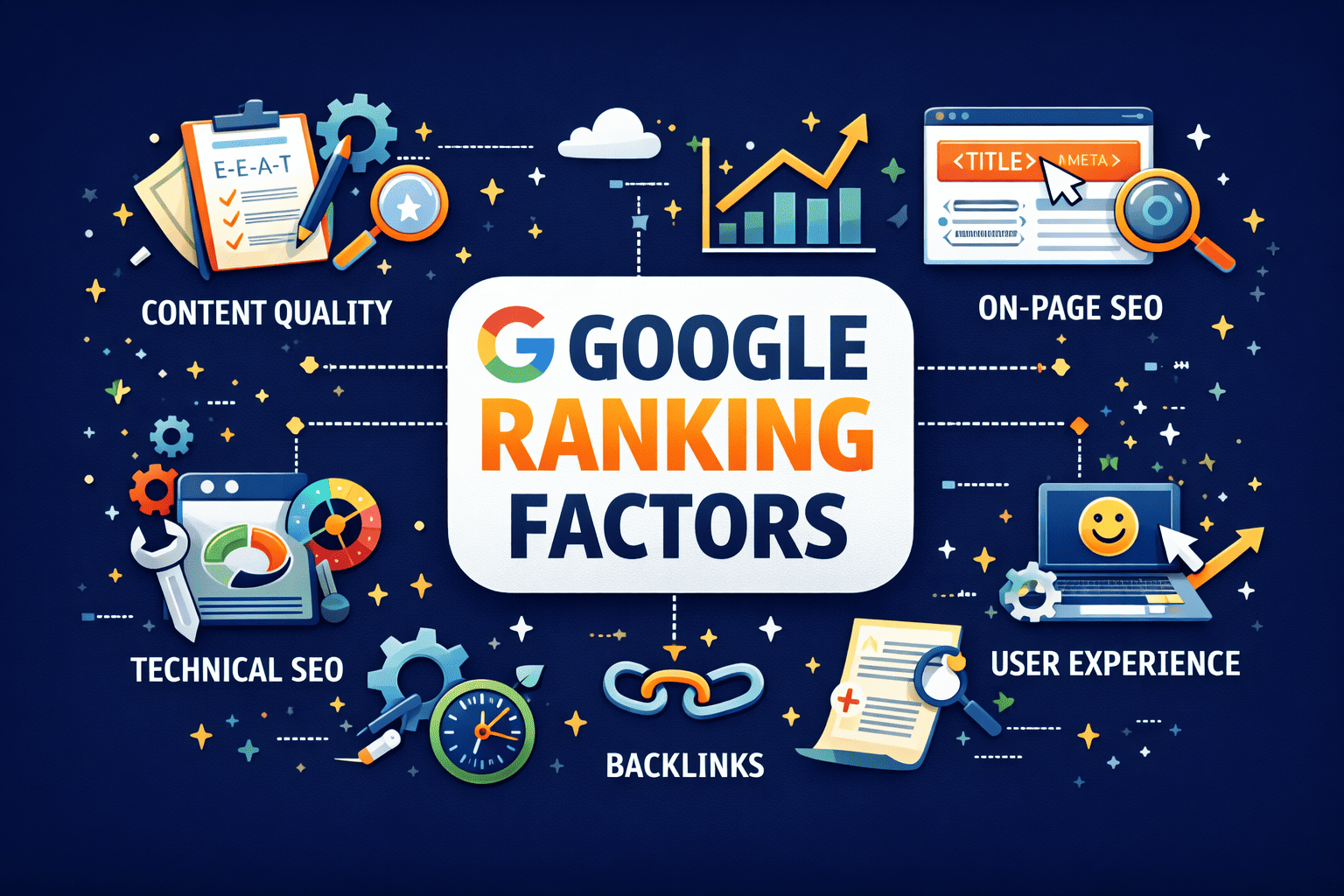
What Are Google Ranking Factors? Your Clear Guide to How Search Works Have you ever wondered how Google decides which website gets the coveted top spot when you hit “search”? One moment you’re asking a question, and the next, Google serves up a neat list of links. It feels almost magical. But behind that simple search box is a complex set of rules and signals—a recipe, if you will. That recipe is made up of Google ranking factors. One way to think about this is, Google’s stated objective is to organize all of the world’s information and make that information accessible and helpful for everyone, everywhere in the world. To accomplish its mission in a fair way, Google needs to have an objective, consistent system for ranking the billions of pages on the web, which it determines by using many different ranking factors. By understanding the various elements that Google uses to rank web pages, the goal is not necessarily to “game” the system or find a way to “trick” Google into favoring your website; instead, the goal is to align your website with what Google believes to be genuinely helpful to your audience. What Are Google Ranking Factors, Really? In simple terms, Google ranking factors are the specific criteria and signals that Google’s algorithms use to evaluate and rank web pages in its search engine results pages (SERPs). The numerous factors indicate to Google a page to be best suited to provide an answer to that user’s search query for any specific keyword or subject The various rank evaluation factors are controlled by Google’s algorithm (Rank Brain and now part of the MUM and BERT ecosystem) in a relative format of hundreds of thousands of rank criteria. No one knows exactly what weighs most heavily in the Google ranking equation, as they would consider the specific algorithm recipes highly classified. However, based on years of use, official communications from Google and independent studies of the search engine industry all lead to a reasonably precise understanding of what is most significant in ranking results. Main Categories of Ranking Factors In order to identify the main factors for a good overall SEO strategy, they can be put together into groups of pillars. SEO experts and professionals frequently refer to these as “Core Pillars for Successful SEO 1. Content Quality & Relevance (The King) This is the non-negotiable foundation. Google’s primary thing is to connect stoners with the most stylish possible answer to their question. E-E-A-T: While not a direct ranking factor, Experience, moxie, Authoritativeness, and responsibility complement Google’s quality evaluation. Comprehensive Coverage : runners that completely explain a content( frequently called pillar content) tend to rank better. Search Intent: You must match what the user wants — learn, buy, or navigate. Example:For “ how to tie a tie, ” Google prioritizes video tutorials because visual literacy stylishly satisfies user intent. 2. On-Page SEO Factors (Your Page’s Blueprint) These are the rudiments on your website you control directly. Title Tags (H1): Clear, keyword- concentrated, and under 60 characters Meta Descriptions: Ameliorate click- through rate Header Tags (H2, H3): Logical structure and better readability Keyword Usage: Natural placement of primary and affiliated keywords Image Optimization: Descriptive filenames and alt text URL Structure: Clean and readable URLs 3. Technical SEO (The Foundation) If your site struggles technically, rankings suffer—no matter how good the content is. Page Speed & Core Web Vitals (LCP, CLS, INP) Mobile-Friendliness (Mobile-First Indexing) HTTPS Security Crawlability & Indexing (sitemaps, robots.txt) 4. Backlinks (The Vote of Confidence) Backlinks are one of Google’s strongest trust signals. Quality > Quantity: One authoritative link beats hundreds of low-quality ones Anchor Text: Natural and relevant text helps Google understand context 5. User Experience (UX) & Engagement Signals Google observes how users behave on your page. Click-Through Rate (CTR) Dwell Time & Bounce Rate Easy Navigation & Clear Layout Good UX tells Google your page actually satisfies users. Practical Tips to Optimize for Key Ranking Factors Analyze Search Intent first Create deeper, better content than competitors Optimize titles, headers, and images Fix technical issues using Search Console & PageSpeed Insights Earn backlinks through value, not shortcuts Myths & Misconceptions About Ranking Factors Myth: There’s a fixed ranking factors list Myth: Social media likes directly affect rankings Myth: Only #1 ranking matters Truth: SEO success comes from consistency, relevance, and quality across many keywords. Conclusion: It’s About Alignment, Not Manipulation So, what are Google ranking factors? They are Google’s way of rewarding websites that deliver the best user experience—useful content, fast performance, strong trust signals, and smooth usability. Instead of chasing algorithms, focus on people. When you build genuinely helpful content on a technically sound website, you naturally align with Google’s ranking systems. Start today: Audit one important page, improve its speed, refine the content, and optimize its title. Small, consistent improvements based on these key SEO ranking signals will lead to long-term visibility and growth Are you ready to take My service? We at The Gardeny are proud to offer carefully designed landscapes crafted to suit our commercial clients’ preferences while prioritizing sustainability. GET IN